
The complete guide
Choosing a Car Emergency Kit for Your Vehicle
An unexpected stop is easier to plan for when you know what equipment you have and where it is stored. Loose items can end up in different pockets, under luggage or left at home after use. A ready-packed car emergency kit gives you a clear starting point, with a defined contents list you can check.
The AA Breakdown & Safety Kit Plus with Tyre Inflator brings several types of roadside equipment together in a zipped canvas carry bag. It is worth looking closely at both the contents and the limits. The right purchase depends on your vehicle, the supplies you already own and the gaps you want to fill.
Start with the contents, not the kit name
A label such as “vehicle emergency kit” can mean different things. One bag might focus on breakdown tools, while another might contain personal supplies. Compare the actual contents rather than assuming that every product covers the same needs.
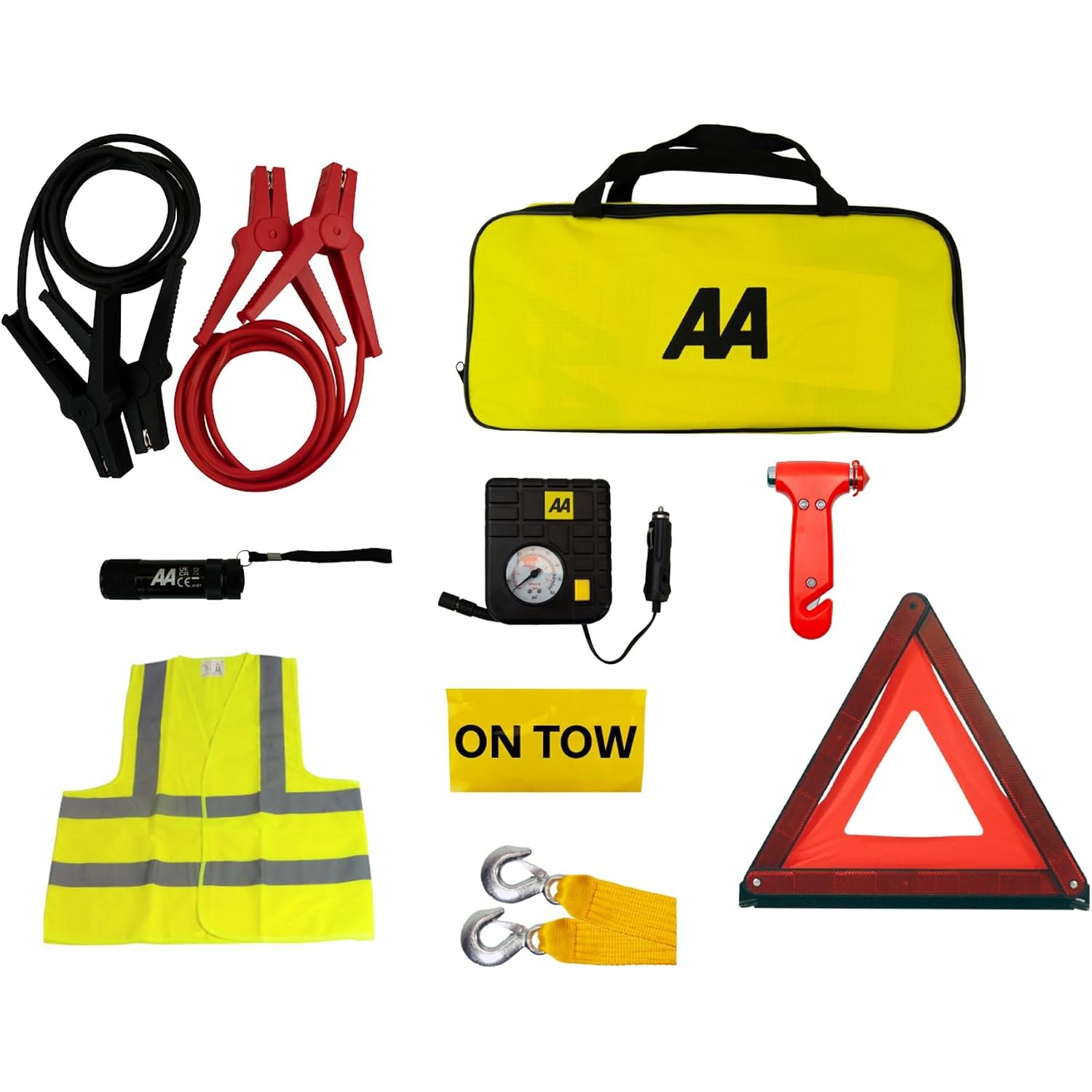
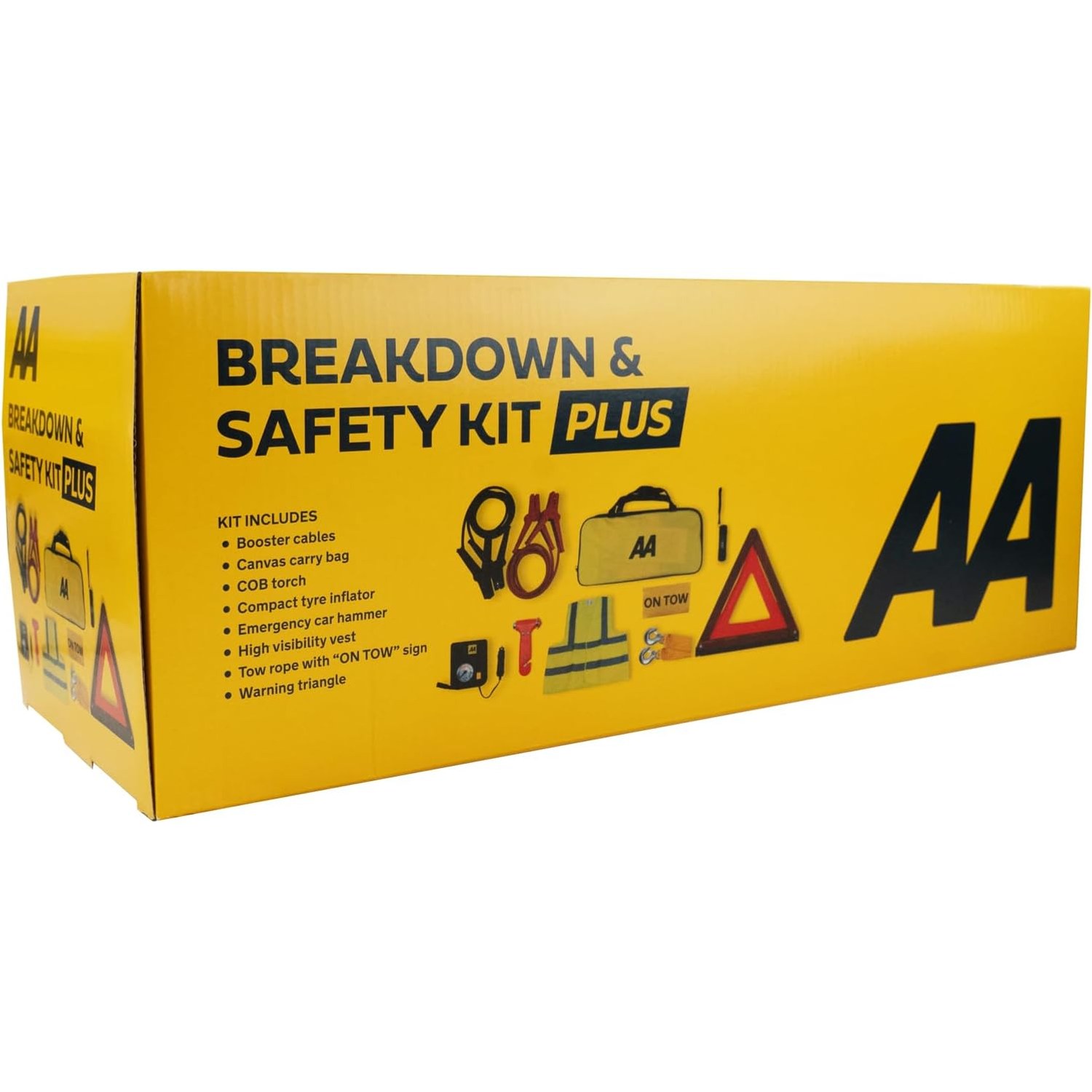
The complete supplied contents list for this kit is a hazard warning triangle, adult high-visibility vest, booster cables, tow rope, LED torch, emergency car hammer, mini tyre inflator and zipped canvas carry bag.
That list is the basis for your buying decision. If you already have some of these items, consider whether keeping a separate set together would be useful. If you are starting from scratch, note what remains outside the kit rather than treating the bag as a complete answer to every roadside problem.
No first-aid kit, food, drinking water, shelter or batteries are claimed as included.
How this roadside safety kit is organised
The main idea is simple. A selection of breakdown equipment is packed with a carry bag so you can keep it together. This can make it easier to compare the contents with a written list and notice when something has gone missing.
As a partial contents summary, the visibility equipment includes a hazard warning triangle and an adult high-visibility vest. The vehicle equipment includes booster cables, a tow rope and a mini tyre inflator. These groups do not describe everything in the bag, so refer to the full list above when checking your purchase.
Having equipment together does not mean each item is right for every event. Road conditions, vehicle design and local rules can affect what is appropriate. Follow the vehicle handbook, component instructions and relevant roadside guidance.
Check the tyre inflator's power connection
The mini tyre inflator uses a vehicle cigarette lighter socket. That is a useful detail to check before buying, especially if you are comparing a car kit with tyre inflator against equipment with another power source.
Do not assume that a matching-looking socket settles every compatibility question. Read your vehicle handbook and the supplied inflator instructions. The listing does not specify pressure limits or other performance details, so those should not be guessed.
This guide does not provide tyre inflation steps. If the inflator's suitability is central to your purchase, confirm the missing specifications first. A tool is only a useful addition when its requirements match the vehicle and the intended task.
Look carefully at cables and towing equipment
A booster cable kit needs more than a familiar name to establish suitability. the product information does not give cable current ratings or engine compatibility. It also states that the equipment is not compatible with every vehicle or battery system.
The same care applies to the car tow rope. Its load rating is not specified here. Its inclusion is not evidence that it can be used with any vehicle or under any towing conditions.
Avoid filling these gaps with assumptions based on appearance or the overall kit name. Check the component instructions and your vehicle handbook. If you need a specific rating, confirm it before ordering rather than planning around an unknown.
Understand the visibility items
A car warning triangle and a high visibility vest for drivers are familiar parts of many roadside equipment lists. This kit includes a hazard warning triangle and a vest described as adult high-visibility.
However, adult sizing does not provide exact garment measurements. No garment certification is specified in the product information either. If fit or a particular standard matters to your purchase, those details need checking separately.
Rules on carrying and using roadside equipment vary by location. Do not assume that the kit meets all requirements simply because it includes these items. For travel abroad, check each destination's rules as part of your journey planning.
Think about lighting and other tools
The kit includes an LED torch and an emergency car hammer. These are distinct items with their own instructions and limits, not a promise that every roadside situation can be handled from one bag.
Batteries are not claimed as included. Check the torch's power requirements when reviewing the contents, rather than assuming it will be ready for use without any further checks.
The hammer's suitability should also be assessed from its supplied instructions. This page does not give glass-breaking procedures or claim compatibility with every vehicle. Before storing unfamiliar equipment, take time to read what the manufacturer says about its intended use and limitations.
Who this kit may suit
This AA breakdown safety kit may suit a driver who wants the listed equipment in one place. A ready-packed selection can be a sensible starting point if you prefer to review a single contents list instead of choosing each item separately.
It may also appeal to households checking supplies for another vehicle. Even then, do not transfer assumptions from one car to another. Different vehicles can have different requirements, especially where battery systems and powered equipment are concerned.
For a new driver, the bag can be part of a wider preparation discussion. Knowing what is inside matters as much as owning it. The kit does not replace breakdown assistance, and carrying it does not guarantee a repair or rescue.
Choose storage before you need it
A car boot emergency kit needs a sensible place in the vehicle. Choose a secure position that follows the vehicle's storage guidance and does not interfere with driving. Avoid leaving tools loose in the passenger area.
Think about access when the car is packed for a journey. Equipment hidden beneath heavy luggage may be hard to reach. Plan the storage arrangement before setting off, without assuming that you will always be able to retrieve the bag safely after a breakdown.
Neither the kit's dimensions nor its weight is specified. If you have a small storage compartment or a firm carrying limit, confirm those details before purchase. Photographs or the word “mini” are not substitutes for measurements of the whole kit.
Keep the contents checked and complete
A roadside emergency bag is worth reviewing periodically, even if it has not been used. Compare the equipment with the contents list and look for missing parts, damage or deterioration. Follow the inspection and care advice supplied with each component.
Keep items clean and dry before returning them to the bag. The bag is described as canvas, but no waterproof claim is provided. Do not treat it as protection against every storage condition.
After using or removing an item, make a note to check or replace it. Suitable replacements should match the relevant vehicle and component requirements. Keeping the bag tidy is helpful, but keeping an accurate idea of what remains inside is more important.
Leave room for separate journey supplies
Driving emergency essentials extend beyond breakdown equipment. This product is a specific kit, not complete disaster survival provision. There is no survival-duration claim, and no rescue guarantee.
Consider food, drinking water and other personal needs separately from the tool bag. Plan around the people travelling, the route and the expected conditions. Do not count supplies as covered unless you have checked that they are actually packed.
It is also sensible to review how you would contact breakdown assistance. The presence of cables, a tow rope or an inflator does not mean that you should attempt a task or that the vehicle can be made roadworthy with the included tools.
Buying for someone else and planning delivery
A breakdown kit can be considered as a practical gift, but a little checking helps. Ask what equipment the recipient already carries and whether the listed components suit their vehicle. Avoid buying on the assumption that all cars have the same needs.
If the kit is intended for a particular trip, allow for the stated delivery estimate. Estimated delivery is 1–2 weeks from ordering. Delivery costs €22.99, with free delivery on goods totals of €89 or more after discounts.
There are 14-day cancellation rights subject to the applicable policy. Read the conditions before ordering, particularly if you are still confirming compatibility or storage fit. No warranty is specified in this product record.
The short version
Choose this kit for its stated contents, not for an assumption of complete roadside cover. It brings a defined set of equipment together with a zipped canvas carry bag, including a mini tyre inflator powered through a vehicle cigarette lighter socket.
Check compatibility, missing specifications and storage space before buying. Keep separate journey supplies and breakdown assistance plans in mind. A useful kit is one whose contents you know, whose limits you understand and whose condition you check.