
The complete guide
Choosing a Winter Car Emergency Kit for Your Journeys
A winter journey can call for more than the items you normally leave in your car. Snow, rain and poor light can expose gaps in your preparation. The trouble is often knowing what is already packed, what has gone missing and what still needs checking.
The AA Emergency Winter Car Kit brings a defined set of supplies together in a carry case. It is a starting point for vehicle winter preparation, not a promise that every situation is covered. The right choice depends on your vehicle, your passengers and the journeys you expect to make.
Start with the journeys you actually make
Think about your usual driving before comparing kits. A short local trip and a long journey away from home may call for different extra supplies. The same applies when you travel alone or carry passengers who have their own needs.
Start by checking what is already in your vehicle. You may own a torch or booster cables but have no temporary rain cover. Or you may have several useful items scattered between bags, cupboards and the boot. A ready-packed kit can help organise those supplies, but it still needs a check against what you already have.
Weather and travel advice matter too. Buying a winter driving kit does not make an unsuitable journey safe. Decide whether to travel separately from deciding what to pack.
Know exactly what is in the case
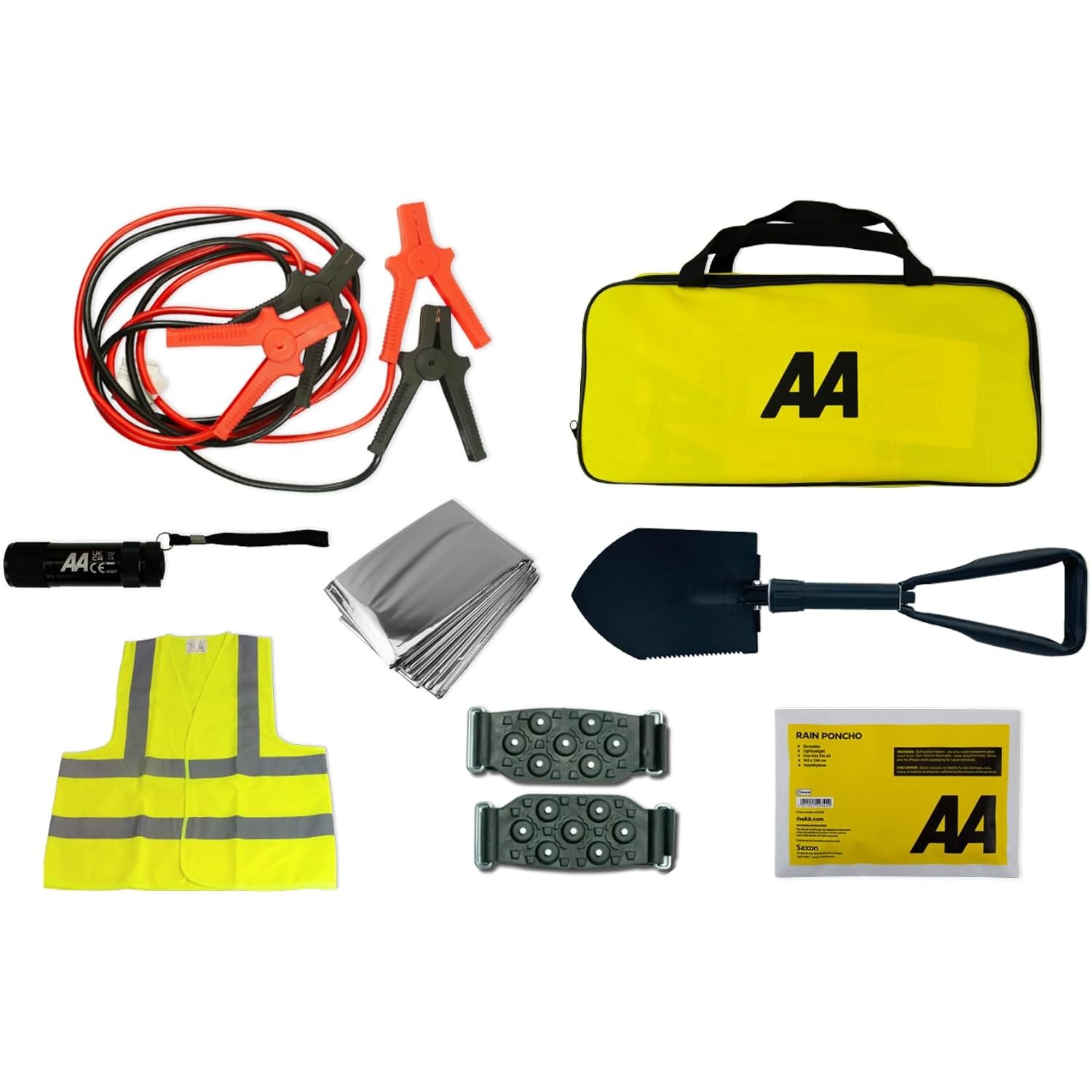
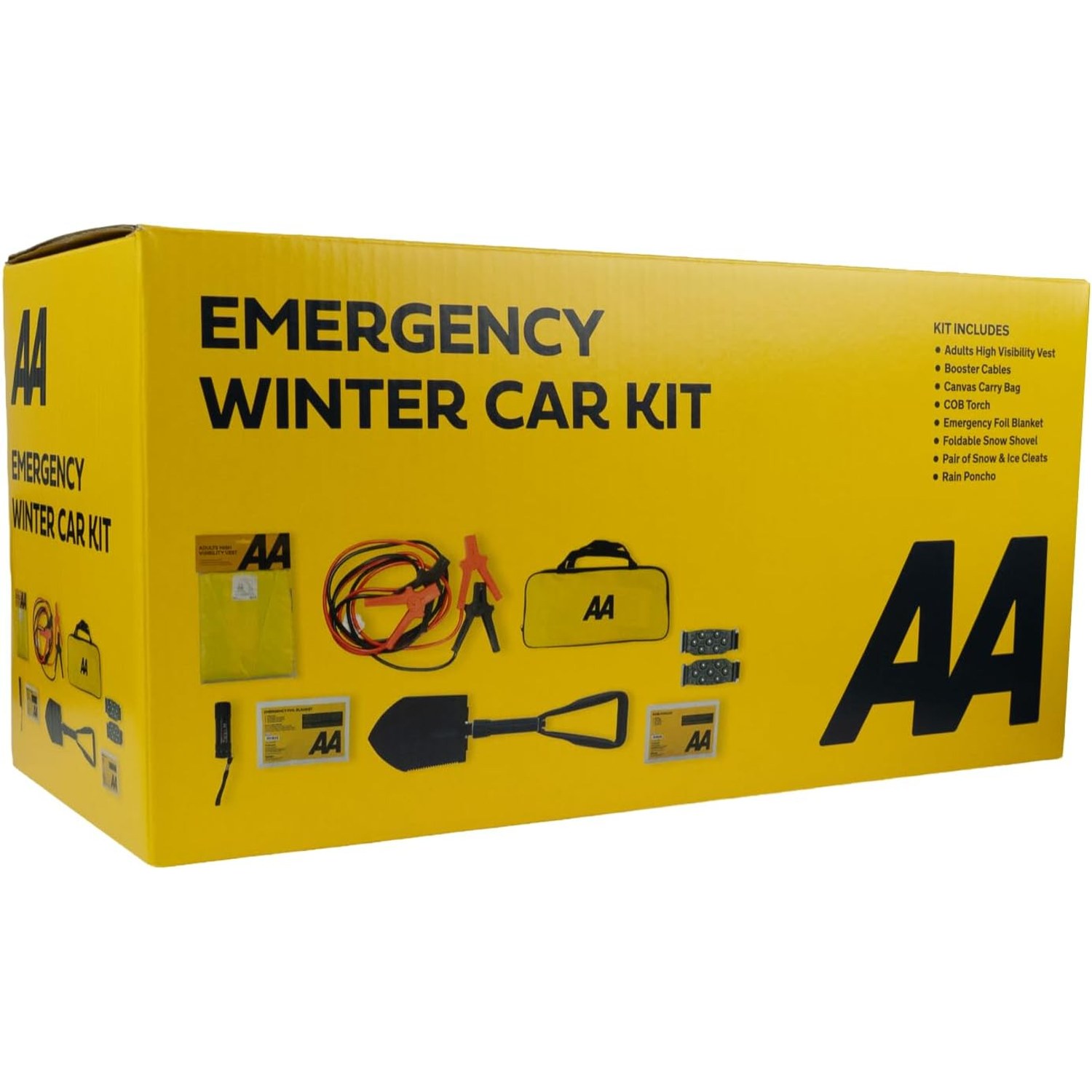
The full listed contents of this kit are a folding snow shovel, LED torch, foil blanket, high-visibility vest, snow and ice grips, rain poncho, booster cables and carry case.
That is the scope of the product. Batteries, first-aid supplies, food and water are not promised. Do not assume that an item is present simply because it appears in another emergency kit or seems like a natural addition.
When comparing products, read the contents rather than relying on the product name alone. “Winter kit” can describe different sets of equipment. A clear list lets you judge whether a particular car snow kit fills gaps in your existing supplies or duplicates items you already own.
Understand the role of each item
The folding snow shovel and snow and ice grips are the snow-related parts of the kit. Their presence does not tell you their dimensions, materials or fit. Read the supplied instructions before use, and check the grips against your intended footwear.
The LED torch provides a lighting option, while the high-visibility vest is the visibility item. Torch output, battery requirements and garment certification are not specified here. Those details should not be assumed from appearance or from the fact that the items come together.
The rain poncho and foil blanket offer temporary cover options. Booster cables complete the listed vehicle accessories. Each item has its own limits, so it is better to see the case as a collection of separate components than as one tool with a single set of instructions.
Check compatibility before you need it
A car kit with booster cables is only a useful choice if those cables are appropriate for the intended vehicle and use. This listing does not promise universal vehicle compatibility. Check the vehicle instructions alongside the component instructions rather than guessing.
The same principle applies to the snow and ice grips. Their inclusion is not a promise that they will fit every shoe or boot. Check their fit and permitted use before a journey, not at the point when you first want to put them on.
This guide does not provide jump-start or vehicle repair procedures. If compatibility or safe use is unclear, seek qualified help. Having an accessory in the boot is not a substitute for knowing whether it is suitable.
Keep temporary cover in perspective
A foil blanket can sound more substantial than its intended role. Here, it is temporary cover, not insulated bedding. There is no stated temperature rating, so do not use the kit's name as a basis for judging how much cold protection it provides.
The rain poncho is also listed without a size, material or performance rating. If a particular fit or level of protection is essential to your plans, seek that information before buying.
This matters when building a wider set of winter travel essentials. Choose additional clothing and other supplies around the people travelling and the conditions you may face. Do not treat the included cover items as a complete answer to cold or wet weather.
Decide who the kit suits
This ready packed car kit may suit someone who wants the listed items grouped together rather than selecting them one by one. It may also suit a driver reviewing older supplies and looking for a clearer starting point.
It is less straightforward if you need a particular cable specification, a confirmed garment certification or a known footwear size range. Those details are not specified here. They need checking before you decide whether the kit meets your requirements.
No weight or dimensions are provided either. If you have limited storage space or need to keep lifting weight low, avoid estimating from photographs. Confirm the details that matter rather than buying on an assumption about size.
Compare contents, not broad promises
When choosing a winter roadside kit, ask what each item adds to your own preparation. If you already have a suitable torch and cables, the remaining contents may matter more to your decision. If you have very few supplies, remember that this is still a defined set with clear omissions.
A useful comparison also looks at what is unknown. Materials, country of origin, dimensions and weight are not specified for this product. Neither are a temperature rating or guaranteed grip performance.
The best winter kit for a particular driver is not necessarily the one with the longest contents list. It is the one whose confirmed contents fit that driver's needs, with any gaps understood and dealt with separately.
Store it where it can stay secure
A car emergency carry case gives the listed items a place together. You still need to choose a sensible storage position in your vehicle. It should not interfere with driving, passenger space or safety equipment.
Think about access as well as available room. A case buried beneath luggage may be awkward to reach when you want to check it. Plan its position before loading for a journey, while keeping it properly secured.
Because case dimensions are not specified, do not assume it will fit a particular compartment. Once you have it, check the fit and follow the component storage instructions. Keep those instructions available so you can refer to them later.
Build a simple checking habit
Ready-packed does not mean ready forever. Open the case before relying on it and make sure every listed item is present. Read the instructions while you have time to check any questions.
For a car kit with LED torch, confirm the torch's power requirements and check that it works. Batteries are not promised, so this needs attention before travel. Inspect the other contents for damage and check that nothing has been removed for use elsewhere.
Repeat the check before winter journeys and after the kit has been used. A short contents check is easier than discovering a missing item when you need it. Keep a note of anything that needs replacing rather than relying on memory.
Care for items after use
Follow the individual cleaning, drying and storage instructions. Different components may need different care, so avoid treating the whole kit as though every item can be cleaned in the same way.
If something becomes wet, let it dry as directed before putting it back in the carry case. Check for damage at the same time. Replace used, damaged or missing items as appropriate, and check compatibility when choosing replacements.
Replenishment is part of keeping emergency car supplies useful. A case may look ready from the outside even when its contents have changed. An occasional check helps keep your expectations in line with what is actually packed.
Plan orders and gifts around delivery
Estimated delivery is 1–2 weeks from ordering. If you need the kit for a planned trip, take that estimate into account rather than assuming it will arrive within a few days.
Delivery costs €22.99, with free delivery on goods totals of €89 or more after discounts. Check the goods total after any discount when reviewing delivery costs.
As a winter motoring gift, the kit may be useful for someone organising their vehicle supplies. Ask what they already own and check any compatibility needs first. There are 14-day cancellation rights subject to policy, so read the terms if you are buying ahead or are unsure about suitability.
The short version
The AA Emergency Winter Car Kit groups eight listed items, including the carry case, into a ready-packed winter vehicle kit. Its value to you depends on how those contents fit your existing supplies and travel plans.
Check the vehicle and footwear instructions, confirm any essential missing specifications, and plan additions separately. This is not a complete disaster survival provision. With those limits clear, you can decide whether it is a sensible starting point for your winter journeys.