
The complete guide
Choosing a Squeeze Water Filter for Your Outdoor Plans
Start with the water, not just the bottle
Carrying water outdoors takes planning. You need to think about how much to bring, where you might refill and whether your treatment equipment is suited to those sources. A portable filter can be part of that plan, but choosing one by size alone misses the most important question. What does it actually treat?
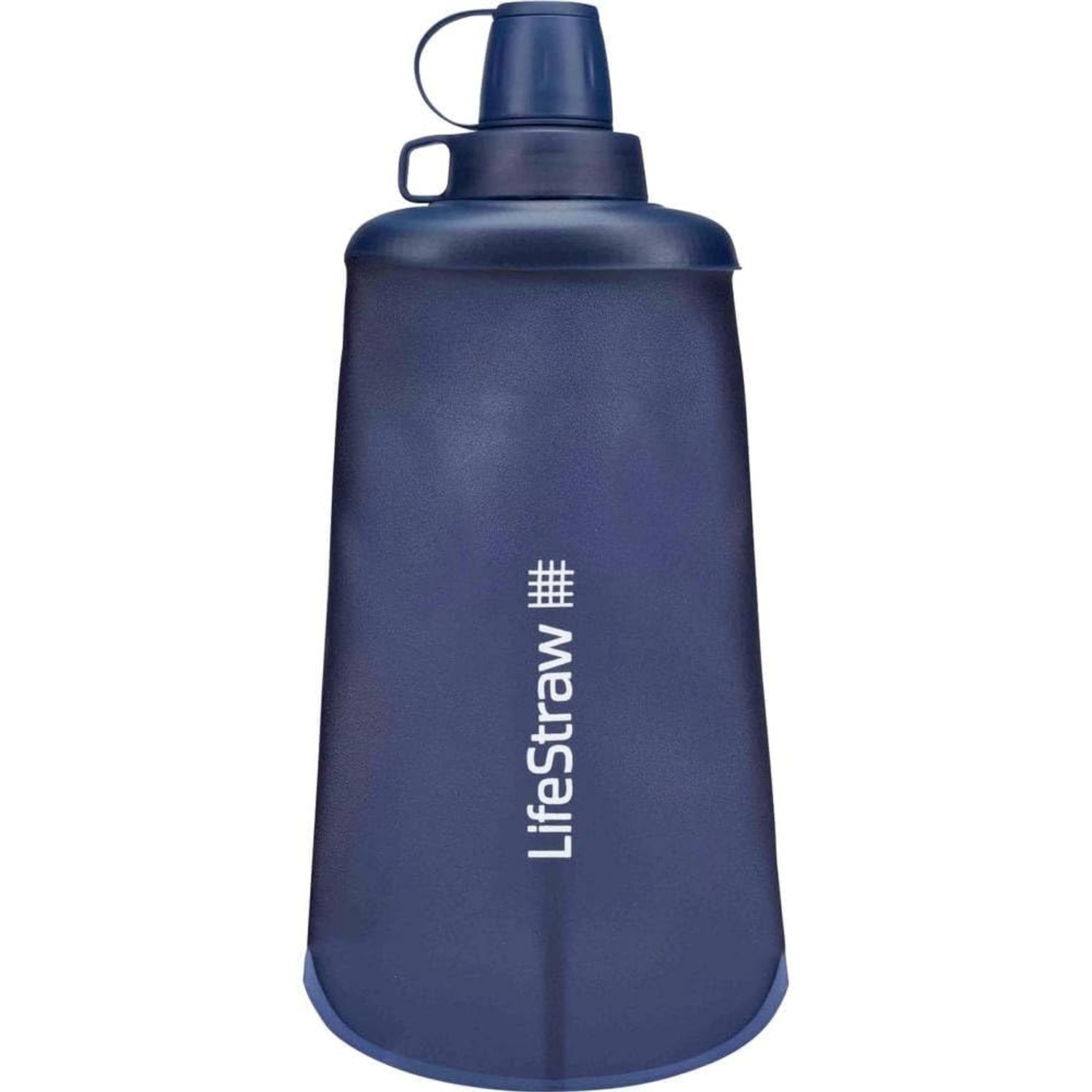
The LifeStraw Peak 650ml Squeeze Water Filter, Mountain Blue combines a collapsible bottle, a membrane microfilter and a backwash syringe. It reduces bacteria, parasites and microplastics.
Its limits matter just as much. It does not remove viruses, dissolved salts or chemical contamination. It is not for seawater, and it does not guarantee that arbitrary water becomes safe. Keep those limits in mind throughout your buying decision, rather than treating them as small print.
What this set includes
The listed bottle holds 650ml and is collapsible. The membrane microfilter provides the stated filtration, while the included syringe is for backwashing according to the manufacturer’s instructions.
That gives you a clear starting point when comparing a collapsible filter bottle with other water treatment equipment. You know the capacity, filter type and included care tool. You should not assume that extra accessories, adapters or replacement parts are included.
Mountain Blue is the listed version. Weight, dimensions and materials are not specified here. If one of those details is essential, such as fitting the bottle into a particular pack pocket, confirm it before ordering. A product photo or the word “portable” is not a reliable substitute for a measurement.
How the membrane fits into your water plan
This squeeze water filter uses a membrane microfilter. The approved treatment claims are reductions in bacteria, parasites and microplastics. Read the manufacturer’s instructions for the correct operating steps before using it.
It helps to separate two decisions. First, consider whether the water source is appropriate. Then consider whether this filter addresses the hazards you need to manage. Filtering is not a reason to ignore uncertainty about the source.
For example, the presence of a filter does not solve dissolved salt or chemical contamination. Nor does a bacteria and parasite water filter automatically provide virus removal. These are different treatment needs, even when products look similar.
If you cannot establish that the equipment suits the source, do not assume that passing the water through it settles the question. Choose a suitable water supply or seek reliable advice for your location.
Who the 650ml format may suit
This format is worth considering if you are comparing a hiking water filter, camping equipment or a bottle-based option for backpacking. The useful question is whether a 650ml collapsible bottle fits the way you plan to carry and treat water.
Capacity is not the same as a full trip supply. Think about how much water you need between suitable refill points, and how certain those refill points are. Your plan should not depend on finding an unverified source simply because you have packed a filter.
For camping, consider where the water will come from before deciding what treatment to bring. For walking, consider the route and conditions as well as the bottle itself. The same filter may fit one outing and be unsuitable for another because the source-water risks differ.
Compare claims rather than broad labels
Terms such as “outdoor water filter” and “portable water filter” cover products with different uses and limits. They help describe a category, but they do not tell you everything needed for a safe choice.
When comparing options, look for clear answers about what is reduced, what is not removed and what care is required. In this case, the stated reductions are bacteria, parasites and microplastics. Viruses, dissolved salts and chemical contamination are outside the stated treatment capability.
No numeric removal percentages, flow rate or filter lifetime are specified here. Avoid filling those gaps with figures from another model or a similar-looking product. Even a familiar brand name is not a reason to transfer specifications between products.
The best hiking water filter for your plans is one whose documented capabilities match your needs. A longer feature list is less useful than a clear fit.
Think through carrying and refilling
A 650ml water filter bottle gives you a known capacity to work with. Start there, then consider the rest of your carrying plan. Will you need additional water between suitable sources? Do you have room to keep equipment organised without mixing dirty and clean components?
The collapsible format is a stated feature, but its exact packed size is not provided. If space is tight, check the dimensions rather than assuming it will fit wherever you want it.
Do the same with weight. When comparing backpacking water filter options, a missing figure should stay a question, not become a guess. It is better to confirm a key detail before buying than to discover that your packing plan was based on an assumption.
Also allow time to read the instructions and understand the equipment before departure. A trip is not the ideal place to work out unfamiliar care steps.
Keep dirty and clean components separate
Handling matters alongside filter selection. Components exposed to untreated water should stay separate from clean-water components. Follow the manufacturer’s directions for doing this during use and when packing away.
Think about where each part will go before you start. A crowded bag or a hurried refill stop can make it easy to lose track of which surfaces have touched untreated water. An organised routine helps you follow the instructions more carefully.
This is not a reason to invent your own cleaning method. Use the manufacturer’s guidance for the bottle, membrane and syringe. Do not assume that a method suitable for another piece of camping kit is suitable for this filter.
If someone else will use the equipment, make sure they understand the separation requirements too. Shared equipment still needs consistent handling.
Make backwashing part of ownership
The included backwash syringe is a care tool, not an extra item to leave behind without thought. Follow the manufacturer’s instructions on how and when to use it.
A backwashing schedule is not specified here. Neither is an expected service life. That means there is no basis for promising a set number of outings or litres before maintenance or replacement becomes necessary.
Before choosing any portable membrane filter, ask whether you are willing to carry out its care routine. The purchase is not just the bottle and filter. It also involves learning how to look after them correctly.
Keep the instructions available for reference, especially if you use the equipment only occasionally. Familiarity can fade between trips, and guessing is not a useful shortcut when caring for a water filter.
Plan carefully for freezing conditions
A used membrane must be protected from freezing. This is an important point if you are comparing equipment for cold-weather trips or any outing where freezing conditions are possible.
Consider the whole journey, not only the time spent walking. Your plan needs to account for storage and transport as well as use. Do not assume that packing the filter away removes the need to protect it.
If you think the used membrane may have frozen, consult the manufacturer’s guidance before relying on it again. Do not guess at its condition or assume that an improvised check proves it is suitable.
For a buyer, the practical question is straightforward. Can you meet the care requirements in the conditions you expect? If not, reconsider whether this equipment fits that trip.
Check the details that matter before buying
Some buyers need exact weight and dimensions. Others need material information or compatibility with an existing bottle. Those details are not specified here, and compatibility with other fittings should not be assumed.
Start with your own requirements. If you need an adapter, a particular packed size or a documented replacement interval, confirm those points before making a choice. The known facts are useful, but they do not answer every possible equipment question.
The same approach helps when buying a gift. The LifeStraw Peak 650ml may interest someone who enjoys walking or camping, but check that it fits their water treatment plans. Capacity, limitations and maintenance matter more than choosing an outdoor-themed present.
Allow time for delivery and a careful decision
Estimated delivery is 1–2 weeks from ordering. Leave enough time before a planned trip to receive the product and read its instructions. Do not build a departure plan around a shorter delivery assumption.
Delivery costs €22.99. It is free on goods totals of €89 or more after discounts, so check the goods total after any discount has been applied.
A 14-day cancellation right applies subject to policy. Read the cancellation and returns terms before ordering, particularly if you are unsure whether the product meets a specific requirement. Warranty terms are not specified here.
The short version
This LifeStraw Peak set provides a 650ml collapsible bottle, membrane microfilter and backwash syringe in the Mountain Blue version. It reduces bacteria, parasites and microplastics.
Choose it only where those capabilities match your water plan. It does not remove viruses, dissolved salts or chemical contamination, and it is not for seawater. Keep dirty and clean components separate, protect the used membrane from freezing and follow the manufacturer’s instructions. Those limits and care needs should guide the decision as much as the bottle’s size.