
The complete guide
A Practical Guide to Choosing and Preparing Emergency Food
Start with food you can actually prepare
A reserve food supply is only useful if you can prepare it when you need it. It is easy to focus on a large serving count or a long shelf-life claim and miss the water, equipment and portion sizes behind those numbers.
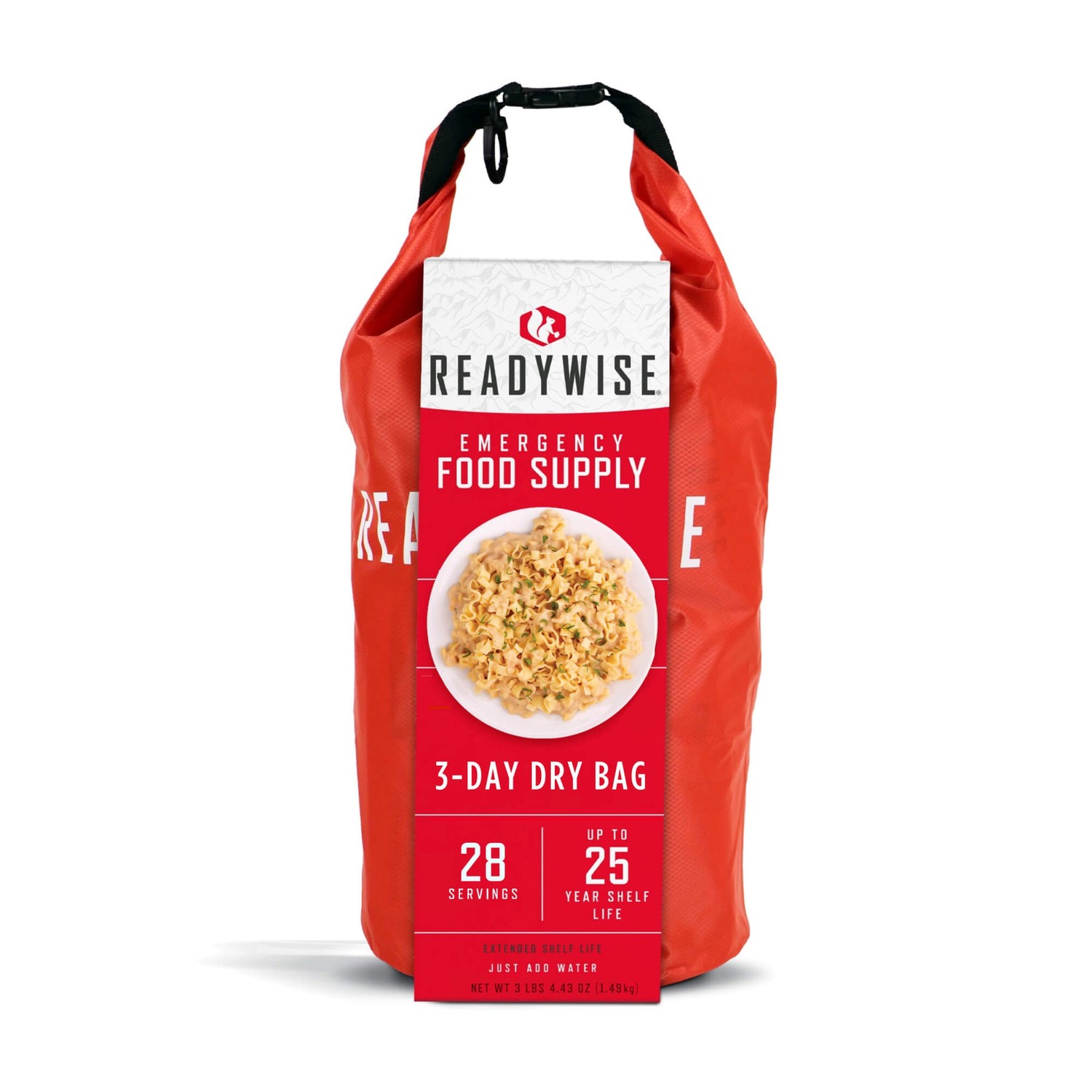
The ReadyWise 28-Serving Emergency Food Dry Bag puts seven food pouches into one 10L dry bag. That keeps the food together, but it does not make the pack a complete emergency kit. You must provide water, a heat source, a cooking vessel and utensils separately.
Think of this Emergency Food Pack as one part of a wider plan. Before buying, check the recipes, understand the preparation method and decide where it will be stored. Those practical checks matter more than a headline number.
Understand what 28 servings really means
This pack contains seven pouches, each with four small servings. That gives 28 small servings in total. It does not mean 28 full meals, and it should not be converted into a set number of days of food.
The distinction matters when comparing household emergency food. A serving count tells you how the contents are divided, but it does not establish whether those portions cover your household's full food needs.
The stated net food quantity is 1.49 kg. That figure refers to food, not the complete packed weight. If you need to carry the bag, the total weight is not specified in the product information. Nor are its external measurements.
Use the serving count as a clear description of the pack's contents. Avoid building a whole provision plan around that number alone.
Look through the seven recipes
The selection covers cereals, pasta dishes, soups, and rice with beans. There is one pouch of each recipe, so the pack offers variety rather than several copies of the same dish.
Crunchy granola and apple cinnamon cereal each come in a 220 g pouch. Savoury stroganoff is supplied in a 230 g pouch, while Pasta Alfredo comes in a 234 g pouch.
The remaining recipes are chicken flavour soup with dried pasta at 175 g, Southwest rice & beans at 194 g, and tomato basil soup with pasta at 212 g. Each pouch has four small servings despite the different pouch weights.
If you are comparing emergency food with pasta, look at the actual recipe list rather than judging by the bag alone. Familiar recipe names can help you shortlist a pack, but they do not replace reading the ingredients.
Put water into your plan from the start
These emergency food pouches need water for preparation. Water is not included, so a bag of food on its own does not cover this part of the job.
The UK preparation sheet specifies 2–4 cups of water per pouch, with a cup defined as 200 ml. That means the stated range is 400–800 ml per pouch. Check the individual pouch for the amount needed rather than choosing an amount from the range yourself.
Keep preparation water in mind when deciding whether this pack fits your plans. You will also need to measure the amount accurately. A household mug may not hold 200 ml, so do not assume that any cup gives the stated measure.
The pack is not presented as ready-to-eat food. Its supplied instructions involve boiling water, which brings equipment and a suitable heat source into the decision too.
Know the preparation method before you need it
Start by reading the individual pouch instructions. Remove the oxygen absorber before preparing the food, and keep it out of the contents.
The supplied UK method is to bring the required water to the boil, stir in the pouch contents, and then turn off the heat. Cover the cooking vessel and leave it for 12–15 minutes, stirring occasionally.
After that standing time, uncover the food and let it cool for 2–3 minutes before serving. The process needs more than hot water alone. You need a vessel that can be covered, a way to stir the food and utensils for serving.
Do not assume that you can prepare the food inside its pouch. The method supplied describes adding the contents to boiled water in a cooking vessel. Follow the pouch directions wherever they give recipe-specific details.
Decide whether it suits your intended use
For household storage, the main questions are straightforward. Do the recipes suit the people who might eat them? Can you provide the preparation water? Do you have the equipment required if your usual cooking arrangements are unavailable?
For a trip where you will carry your supplies, there are more unknowns to resolve. The dry bag has a stated 10L capacity, but the packed weight and outer dimensions are not provided. Those details can matter when space and carrying weight are limited.
This is also not a no-heat option based on the supplied directions. If your plan does not include a way to boil water, choose food with preparation requirements that match your actual setup.
A useful food choice fits the conditions in which you expect to use it, not just the storage space available at home.
Check allergens before comparing convenience
The pack contains cereals containing gluten, including wheat, barley, rye and oats. It also contains milk and celery. It may contain soya, egg, nuts and other cereals containing gluten.
That makes the ingredient check an essential part of choosing this product. Do not assume that a familiar recipe name tells you everything it contains.
The pack is not gluten-free. A description of one pasta ingredient does not change the allergen status of the whole pack. No special dietary suitability is claimed.
For exact recipe ingredients and per-100g nutrition, read the separate Food information section before purchase. This is especially important if you are buying for a shared household or giving the pack to someone else.
Read the shelf-life claim carefully
Long shelf life food can be useful for reserve storage, but the starting point of the claim matters. The manufacturer states up to 25 years from manufacture under suitable storage conditions.
That is not a promise of 25 years remaining when your order arrives. The supplied pack's best-before date is the date to check when organising your food storage.
This is a useful comparison point for any Long Life Food Supply. Look beyond the maximum advertised period and ask what date applies to the actual product you receive.
Once it arrives, check that date before putting the pack away. Keep it in a place where you can find it again, rather than relying on memory when reviewing your supplies later.
Store it with the instructions in mind
The supplied guidance is to store the food in a cool, dry place. Choose your storage position around that instruction, even though the food comes in a dry bag.
The listing does not specify a waterproof rating or immersion performance for the bag. Its name should not be treated as a promise that it will protect the contents in every wet setting.
Opened pouches need a different approach from unopened reserve food. The guidance says to consume a pouch straight away once opened. Do not plan to open one, use a small amount and put the rest back into long-term storage.
Because each pouch contains four small servings, think about how you will use its contents before opening it. That helps avoid a mismatch between the pack format and your intended use.
Compare the whole setup, not just the food bag
When comparing a dry bag food pack with other options, include everything needed to prepare it. Water, cooking equipment and utensils are separate purchases or supplies you must already have.
This pack also excludes first aid supplies and lighting. Keeping those gaps clear helps prevent a food purchase from being mistaken for a complete emergency kit.
Look at the contents, preparation steps, allergen information and storage needs together. If any of those do not fit your situation, a high serving count does not solve the mismatch.
For delivery planning, use the estimate shown in the cart. Delivery is €22.99, with free delivery on goods worth €89 or more after discounts. Review the current returns policy before ordering if you are uncertain about suitability.
The short version
The ReadyWise 28-Serving Emergency Food Dry Bag contains seven recipes in seven pouches, held together in a 10L dry bag. It provides 28 small servings, not 28 complete meals or a stated number of days of food.
Choose it only with a clear plan for water, heat and cooking equipment. Read the Food information section, check the best-before date on arrival, and store the unopened food in a cool, dry place.
The right reserve food supply is one whose contents and preparation needs you understand. This pack is worth considering when those details fit your wider plan.