
The complete guide
Choosing the Sawyer Squeeze SP129 for Your Water Plan
A water filter starts with a water plan
Water can be one of the harder parts of planning a walk. Carrying everything from the start affects what goes in your pack, while depending on water along the route means thinking carefully about the source. A filter can have a role, but only when you know what it does and what it leaves untreated.
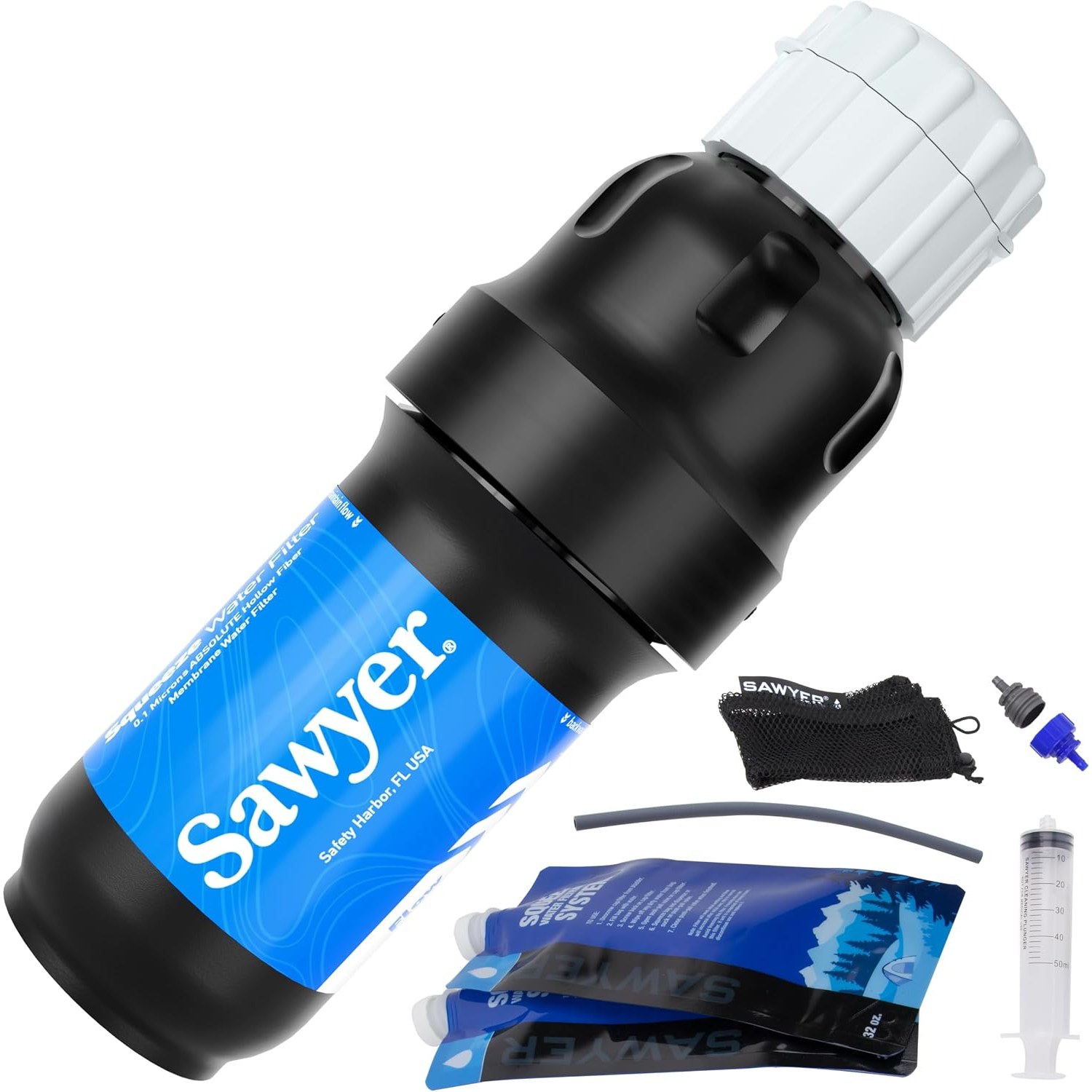
The Sawyer Squeeze SP129 Water Filter Kit uses a 0.1 micron hollow fibre membrane to filter bacteria and protozoa. That is its stated job. It does not remove viruses, dissolved salts or chemical contamination, and it is not for seawater.
Those limits should guide the purchase from the start. This is not a promise that any water you find can become safe to drink. Choosing a hiking water filter means matching its treatment scope to the water you expect, rather than choosing by the product name alone.
What the 0.1 micron membrane tells you
The central specification is a 0.1 micron hollow fibre membrane. This identifies the filtration technology and membrane size. For this product, the approved filtration scope is bacteria and protozoa.
It is tempting to treat one small number as a complete measure of water treatment. It is not. A membrane specification does not turn a filter into a solution for every possible contaminant. The explicit exclusions are just as important as the number printed beside the membrane.
Think of the SP129 as a bacteria and protozoa filter with a defined role. If your water plan requires removal of viruses, salts or chemical contamination, this kit does not meet that requirement. Do not let the general phrase “water filter” hide that distinction.
The full operating instructions also matter. Read them before your first outing, not when you are already at a water source trying to work out the setup.
Source choice matters more than appearance
A clear stream can look inviting. That appearance does not tell you whether the water contains something outside this filter's treatment scope. Equally, a familiar location should not be treated as proof that the water is suitable.
Before choosing a walking water filter, consider what you know about the planned sources. Where is the water coming from? Is there reason to suspect chemical contamination or dissolved salts? Are you relying on an assumption simply because other people stop there?
The SP129 cannot answer those questions for you. Its job is filtration within the stated limits, not identifying the risks present in a source.
If you cannot establish that a source is appropriate, do not treat this filter as a reason to ignore that uncertainty. Build your route around a considered water plan, with an alternative if the expected source is unavailable or unsuitable.
Who should consider this kit?
The Sawyer Squeeze water filter is worth considering for walkers and backpackers whose intended use matches its treatment scope. It may also form part of a camping water plan, provided the same careful assessment of the source takes place.
The setting alone does not settle suitability. A short walk and a long trip can involve different water sources, but neither label tells you what is in the water. “Outdoor use” is not a treatment standard.
It also suits a buyer who is prepared to follow care instructions. Backwashing and protecting a used filter from freezing are part of ownership, not optional details to think about later.
For someone seeking one product that handles every water problem, this is not that product. Its exclusions are clear. Making that distinction before purchase is more useful than discovering it when your plans depend on the filter.
Check the kit details before buying
The model is SP129, and the product is the Sawyer Squeeze SP129 Water Filter Kit. Beyond the confirmed filtration facts, several practical details are not specified here.
Pouch count is unconfirmed. Do not assume that photographs of similar kits, another person's setup or a familiar model name establish exactly how many pouches this order contains. If that count affects your plans, confirm it first.
Weight and dimensions are also not specified. That matters if you are comparing a backpacking water filter against a firm pack-weight target or trying to fit it into a particular space.
Container compatibility is another point to check rather than guess. A plan built around an existing bottle needs confirmed compatibility. Buying first and hoping the parts work together can leave an avoidable gap in your equipment.
Think through the refill routine
Choosing squeeze water filtration involves more than deciding which filter to carry. Think through where you expect to stop, what equipment you will need and how you will follow the manufacturer's operating instructions.
Do this before leaving home. Reading the setup guidance in a calm setting gives you time to spot questions about accessories or compatibility. It also helps you avoid learning the process while tired or short of daylight.
No flow rate is specified here. That means you should not base a route schedule on a claimed number of litres per minute or assume a refill will take a fixed amount of time.
The same caution applies to total capacity. No service life is specified, so there is no basis for an unlimited-use claim. Treat the manufacturer's maintenance and replacement guidance as part of the routine.
Backwashing belongs in the plan
Backwashing a water filter is a care task that should follow the directions for the actual model. For the SP129, the instruction is to backwash according to the manufacturer.
Avoid substituting a general internet routine for those directions. The correct method, any equipment needed and the timing should come from the product instructions. This page does not specify a schedule or backwashing volume.
Before a trip, make sure you understand what the care process requires. If you are buying the filter for someone else, make sure they know that maintenance is part of using it too.
After the trip, return to the cleaning and storage guidance rather than putting the kit away without checking it. A clear routine is easier to follow than trying to remember what you did several months earlier.
Protect the used filter from freezing
The freeze warning is direct. Keep the used filter from freezing. It deserves attention when planning a cold-weather walk, but also when deciding where to store the filter between trips.
Think beyond the daytime forecast. Your equipment may be exposed to different conditions overnight or while stored before and after the outing. Water filter freeze protection needs to cover the whole period in which freezing could occur.
Do not assume that a filter which looks unchanged after a suspected freeze is ready to use. Check the manufacturer's guidance before relying on it again.
No specific cold-weather performance rating is stated here. If your plans depend on one, resolve that question before purchase. A general outdoor product description should not be read as permission to ignore the explicit freeze warning.
Compare filters by the questions they answer
When comparing outdoor water treatment products, start with treatment scope. Ask what each option is stated to remove and what it explicitly does not remove. This helps prevent a low weight or appealing kit format from becoming the only deciding factor.
Next, compare the practical details that matter to your trip. Packed size, included parts, compatibility and maintenance can all influence whether a product fits your routine. For this kit, several of those details need confirmation.
The best hiking water filter for your plans is not necessarily the one with the broadest-sounding description. It is the one whose confirmed capabilities match the job, with limits you understand and care requirements you can follow.
Keep unsupported claims out of the comparison. There is no stated flow rate, unlimited lifetime or all-water-safe promise here. Those gaps should remain questions, not become assumed benefits.
Ordering for a trip or a gift
Estimated delivery is 1–2 weeks from ordering. If you have a departure date, allow for that estimate rather than treating the order as an immediate replacement for missing equipment.
Delivery costs €22.99, with free delivery on goods totals of €89 or more after discounts. Check the qualifying goods total after applying discounts so you know which delivery charge applies.
For a gift, ask about the recipient's existing equipment and intended use. A filter is a practical choice, but it is also a choice tied to personal trip plans and care habits. Confirming those details can be more helpful than keeping every part of the gift a surprise.
The 14-day cancellation rights are subject to policy. Read the applicable terms before ordering, especially if timing or suitability is uncertain.
The short version
The Sawyer Squeeze SP129 has a clear filtration role. Its 0.1 micron hollow fibre membrane filters bacteria and protozoa. It does not remove viruses, dissolved salts or chemical contamination, and it cannot be used for seawater.
Choose it only where those limits fit your water plan. Confirm missing kit details, read the operating instructions, backwash as directed and keep the used filter from freezing. That gives you a sounder basis for a purchase than expecting any single filter to solve every water problem.