
The complete guide
Choosing an AM/FM Wind-up Radio for Home and Away
When a separate radio makes sense
A power cut can leave you looking for a simple way to hear broadcasts without using your phone. You might also want a radio for a trip, or a spare receiver kept in a familiar place at home. The main question is whether its features match the way you plan to use it.
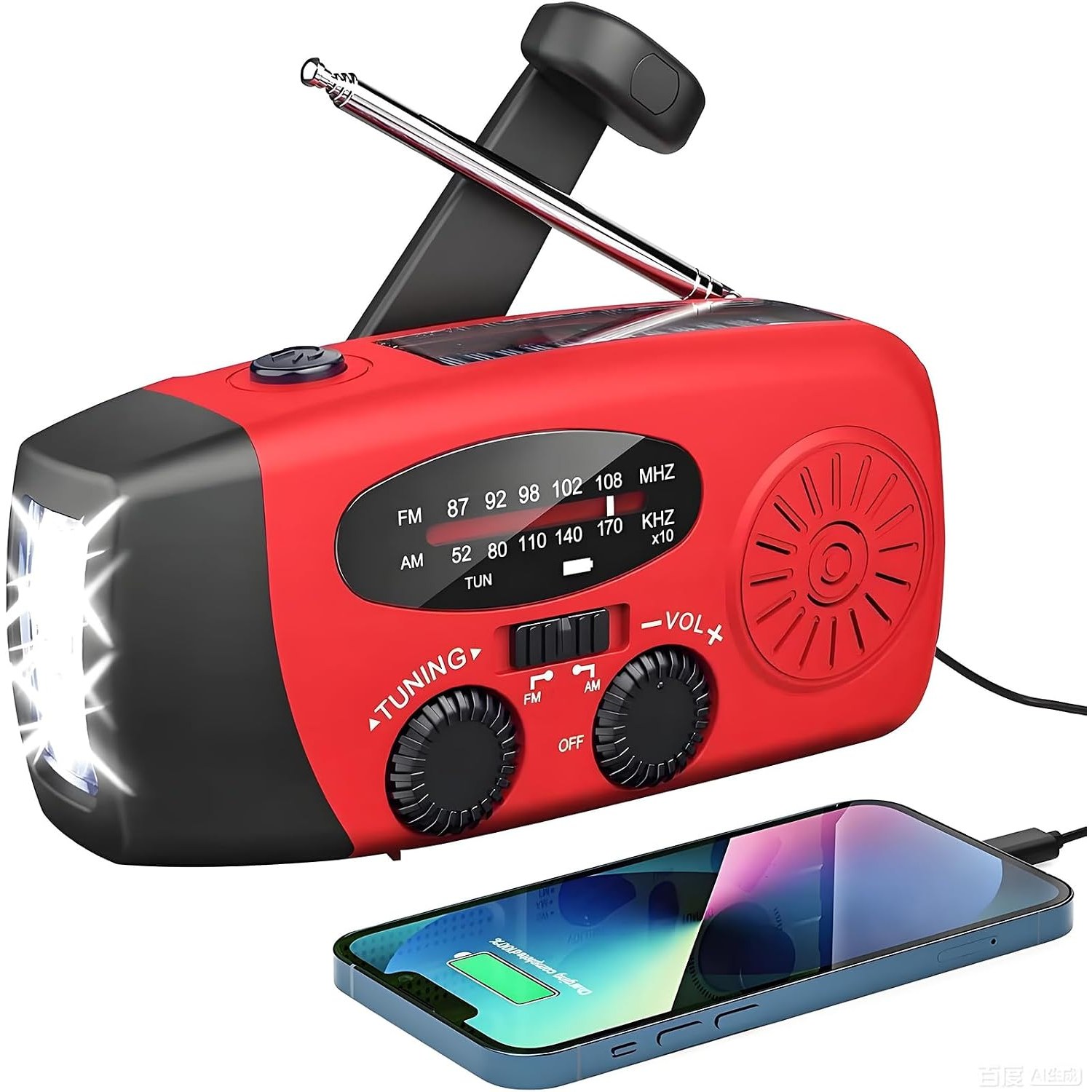
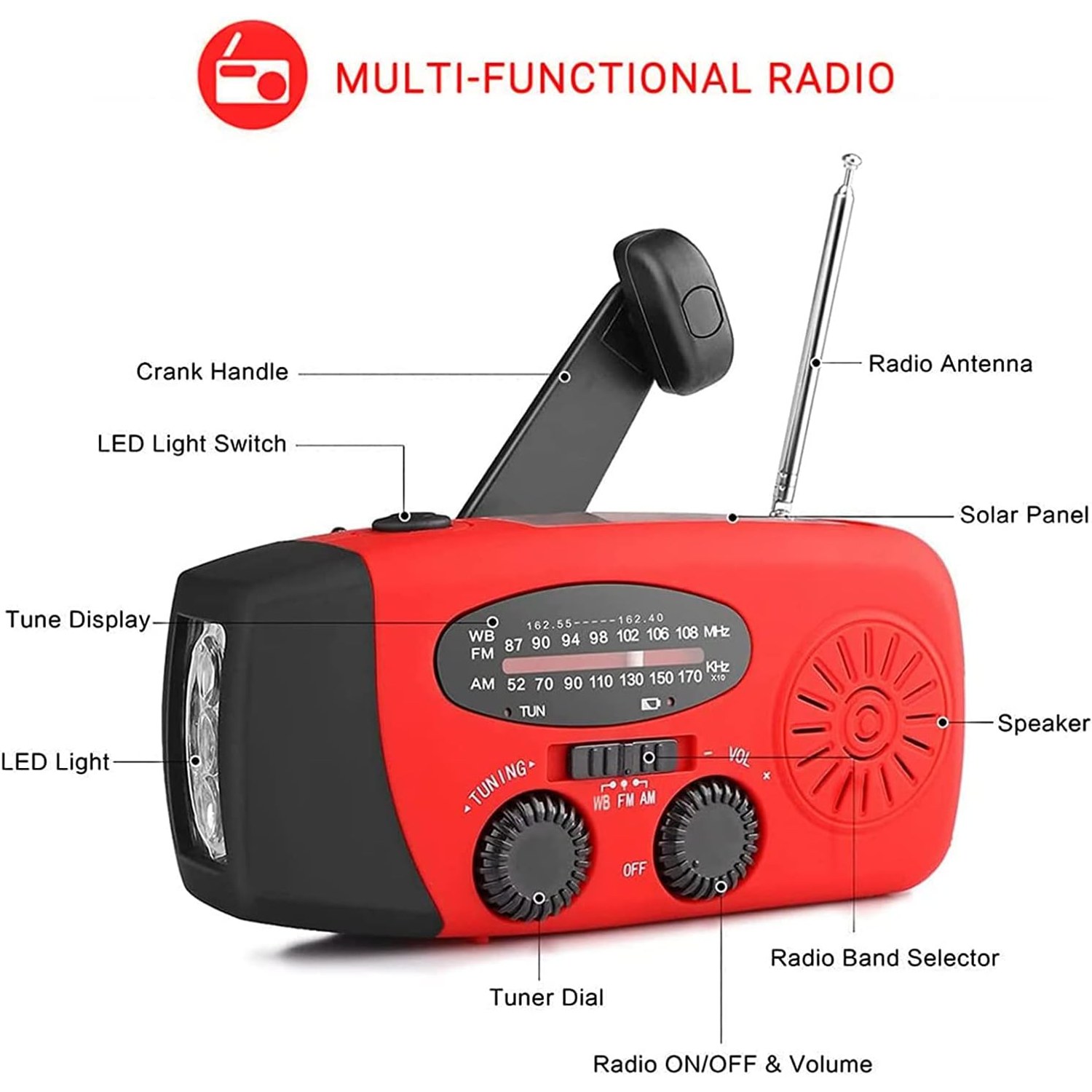
The Solarbaby AM/FM Wind-up Radio, Red brings analogue radio listening and an LED torch into one portable device. It has a 2000mAh internal rechargeable battery, with micro USB charging and two backup methods, solar and crank.
There are important limits to keep in view. It does not receive DAB or UK NOAA broadcasts. No runtime is guaranteed, and no waterproof claim is provided.
Start with the stations you want to hear
Before comparing charging options, check the radio format. This model receives AM and FM broadcasts using analogue tuning. If those are the bands you want, it offers the relevant type of reception. If your preferred listening depends on DAB, it is not the right receiver.
An AM FM analogue radio still depends on the stations available where you are. Buying a radio cannot guarantee that a particular station will be clear in every room or at every campsite. Buildings, location and local reception conditions can affect listening.
Once it arrives, try it in the places where you expect to use it. Tune to familiar stations and check whether you can hear them clearly. Doing this in advance is more useful than discovering a reception problem during a power cut.
For travel, make the same check at your destination when practical. A station you hear at home may not be available elsewhere.
Understand what the charging options mean
This micro USB rechargeable radio has an internal 2000mAh battery. It also supports solar and crank charging, but those two methods are described as backups. That distinction matters when deciding how much you can depend on them.
Think of preparation as the main task. Charge the radio before a planned trip or before putting it into a ready-to-use household kit, following the supplied instructions. The backup methods give you other charging options, but they do not establish a fixed amount of listening time.
No charging times are specified. There is also no stated figure for how much winding produces a certain number of minutes of radio use. Avoid buying on the assumption that a brief turn of the crank will provide hours of listening.
The same care applies to solar charging. A solar powered emergency radio is not a promise of constant operation from daylight. This model's solar feature should be treated as a backup, just as described.
Battery capacity is not a runtime promise
A 2000mAh battery rating is a useful specification, but it does not tell you exactly how long this radio will run. No guaranteed runtime is provided for listening or for the LED torch.
This matters most when planning for a long interruption to power. You cannot work out a dependable listening schedule from the capacity figure alone. Nor should you assume that the radio and torch will both remain available for a particular number of hours.
Test the product before relying on it, and follow its operating instructions. Familiarity helps you understand its controls and charging routine without needing to learn them in poor light.
If your plans require a stated minimum runtime, look for a product with that information clearly provided. An unknown figure should remain unknown rather than becoming a hopeful estimate.
Where this radio fits at home
A wind up radio for power cuts can have a clear place in a household kit. It gives you a separate broadcast receiver, while its torch keeps a light in the same device.
Choose a dry, accessible storage spot. A useful location is one that the people who may need the radio can remember and reach. Avoid packing it so deeply into a cupboard that finding it becomes a task of its own.
A battery radio for home also benefits from occasional checks. Turn it on, try a station and check its charge in line with the instructions. A backup device is easier to use when its condition is familiar.
Keep its role realistic. It receives broadcasts and provides an LED torch. Phone charging is not specified, so it should not take the place of a separate charging plan for your phone.
Taking it camping or away for a weekend
This model may suit a camping list if you want AM/FM listening and a built-in light. The choice still depends on how you travel and where you will keep it.
No weight or dimensions are specified. That means you cannot judge its fit in a small bag or its effect on a tightly planned walking load from the product information. If space is critical, confirm the measurements before committing.
Weather protection needs equal attention. There is no waterproof claim, so keep the radio sheltered from rain and away from wet ground or splashes. Do not assume that an emergency-style radio is made for exposed outdoor use.
Check station reception when you arrive rather than waiting until you need information. A camping radio is most useful when you already know where it receives clearly and how to operate it.
What the built-in torch adds
Keeping a radio and torch together can reduce the number of separate things you need to find. That is useful when a room goes dark or when you need a light close to your listening spot.
The specification confirms an LED torch, but it does not state brightness, beam distance or lighting runtime. Those missing figures matter if you are choosing a light for a demanding task.
Treat the torch as a stated feature, not proof that it can replace every other light you own. If you need a particular level of illumination, choose lighting with suitable published specifications.
Try the torch when the radio arrives. Learning its control in normal conditions makes more sense than trying to find it for the first time during a blackout.
Keep emergency-kit roles separate
The word “emergency” can lead to assumptions about features that are not actually listed. For this product, the confirmed functions are analogue AM/FM listening, an LED torch and the stated charging methods.
There is no water filtration, purification or disinfection function. If water supplies form part of your household planning, address that need separately with suitable equipment and official guidance.
There is also no UK NOAA reception and no DAB support. Do not expect a dedicated warning service merely because the radio has a crank or solar charging.
A useful emergency kit radio has a defined job. Knowing both its features and its limits makes it easier to decide what else your kit needs, without asking one device to cover unrelated tasks.
Check the unknown details before buying
Some buying decisions depend on information that is not available here. The casing material, country of origin, weight and dimensions are not specified. Neither are charging times or package contents.
If you need a cable or adaptor, confirm what comes in the box. Micro USB charging support alone does not establish which accessories are included.
The same approach applies to durability. No waterproof or impact-resistance claim is supplied. Choose based on the listed features rather than the appearance or category of the product.
For a gift, check the recipient's listening habits. Someone who wants a red portable radio for AM/FM may appreciate this format. Someone who listens only to DAB needs a different type of receiver.
Care, delivery and the final decision
Keep the radio dry and clean the exterior with a soft, dry cloth. Follow the supplied instructions for charging and winding the crank. When storing it as a backup radio, make periodic checks part of your routine rather than leaving it untouched indefinitely.
Allow time for arrival. Extended delivery is estimated at 2–4 weeks from ordering, so this is not a choice for an immediate need. Delivery costs €22.99, with free delivery on goods totals of €89 or more after discounts.
There are 14-day cancellation rights subject to policy. Read the terms before ordering, particularly if you are unsure about fit or suitability. No warranty length is specified here.
The short version
Choose this Solarbaby model if you want a portable analogue AM/FM radio with a rechargeable battery, backup solar and crank charging, and an LED torch.
Buy with its limits in mind. There is no DAB, UK NOAA reception, waterproof claim or guaranteed runtime. It cannot treat water. Confirm any missing details that matter to you, allow for extended delivery, and test it before adding it to your regular backup plan.